
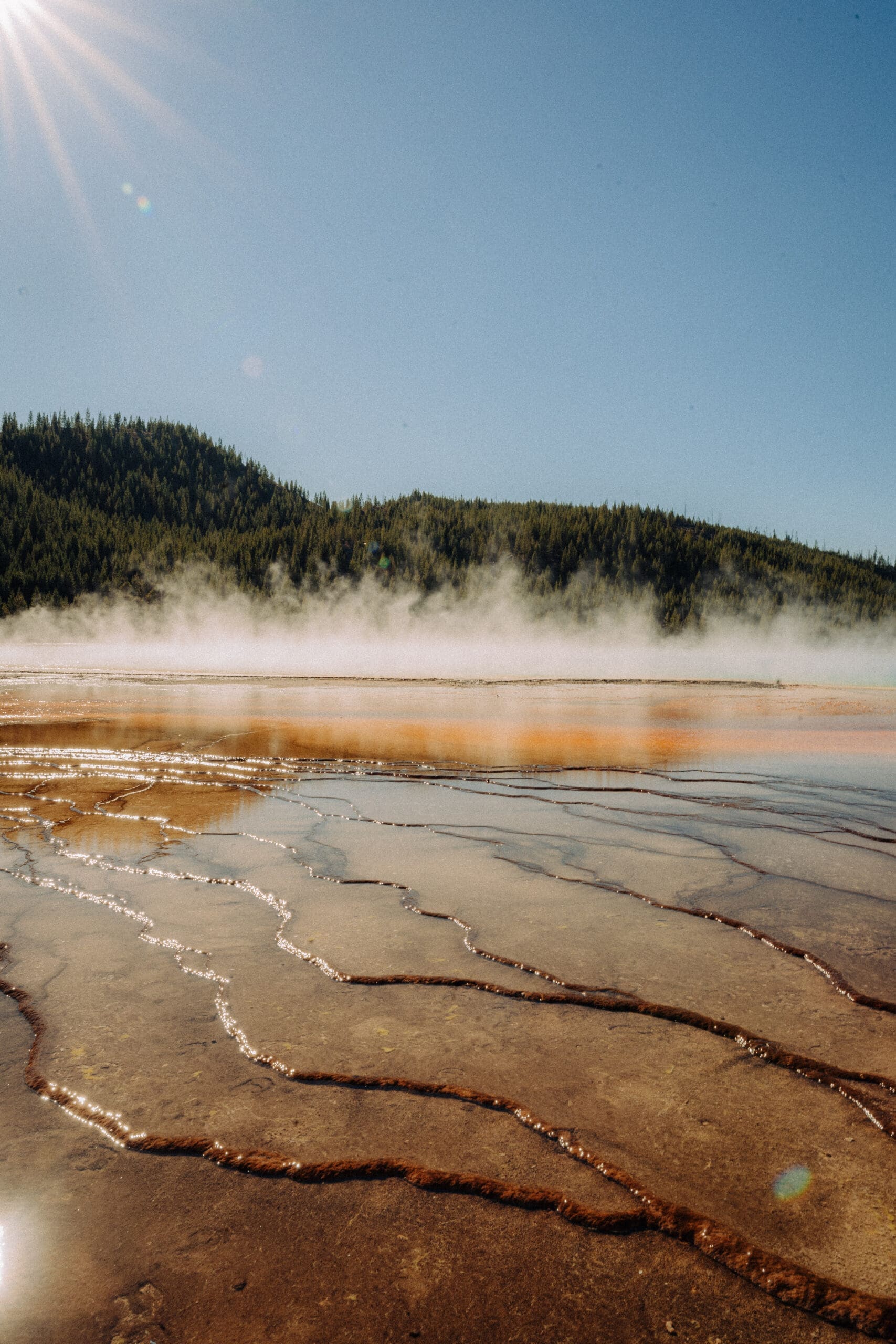
There’s a moment that happens in Yellowstone that catches people off guard.
It’s usually not the big landmarks. Not Old Faithful, not the canyon, not even the wildlife.
It’s somewhere in between—when you’re driving, or standing quietly at a pull-off, and you realize how much space there is and how different it feels from anywhere else you’ve been.
Yellowstone was the first national park in the world. There’s a reason it was set aside. And once you’re there, you understand it pretty quickly.
If this is your first trip, you don’t need to do everything right.
You just need a few things dialed in so you can actually enjoy it (here are the 10 Mistakes Most First-Time Visitors Make so you can avoid them!)
Where to Fly (and Why It Matters More Than You Think)
Most people fly into either Bozeman, Montana or Idaho Falls, Idaho.
Both are solid options, just with slightly different trade-offs.
Bozeman (BZN):
- Closer to the north entrance of Yellowstone
- A bit more built-up with restaurants and lodging
- Great if you’re exploring the northern parts of the park
Idaho Falls (IDA):
- About 1.5–2 hours from West Yellowstone / Island Park
- Typically easier, quieter airport experience
- A great option if you’re staying near the west entrance
Stop for Groceries Before You Head In
This is one of those small decisions that makes your trip smoother.
Before you leave town, stop and grab:
- breakfast basics
- snacks for the park
- drinks and water
- easy dinner options
Both Bozeman and Idaho Falls have grocery stores and a Costco if you want to stock up.
Once you’re near Yellowstone, options get more limited and more expensive.
Having food on hand means:
- less rushing in the mornings
- easier days in the park
- relaxed evenings when you get back
Start Here Before You Even Arrive
Download the National Park Service App before you head in.
Cell service is limited throughout the park, and this ends up being more useful than people expect.
Inside the app:
- maps (download them ahead of time)
- trails and stops
- geyser info
- park alerts
It’s simple, but it saves you from guessing once you’re in.
Understand the Scale (This Changes Everything)
This is the piece most first-time visitors underestimate.
Yellowstone is huge.
- drives take longer than expected
- traffic stops for wildlife
- parking fills up mid-day
- one stop can easily turn into an hour
If you try to see everything, you’ll spend most of your time in the car.
Instead, plan your days loosely:
- pick one main area in the morning
- another in the afternoon
- leave space in between
You’ll enjoy it a lot more this way.
Book Ahead So You’re Not Figuring It Out There
Yellowstone fills up—especially in summer.
That includes:
- lodging
- tours
- rental cars
- even dinner spots in some areas
When that’s handled ahead of time, your trip feels completely different.
Wyld Ridge is located in the perfect spot outside the park, close to the west entrance, and sleeps 8! Book your stay here.
Where You Stay Matters More Than You Think
A lot of people assume they need to stay inside the park.
You can, but it’s not the only way—and it’s not always the best one.
Staying just outside Yellowstone, especially near West Yellowstone or Island Park, gives you more flexibility.
You’ll have:
- more space
- better access to groceries
- a place to actually relax at night
After a full day in the park, having somewhere quiet to come back to makes a bigger difference than people expect.
What to See First (Keep It Simple)
For a first trip, focus on a few key areas:
- Old Faithful and the geyser basin
- Grand Prismatic Spring
- Grand Canyon of the Yellowstone
- Yellowstone Lake
- Lamar Valley for wildlife
That’s more than enough to fill several days.
You don’t need to check everything off.
Go Early (It’s Worth It)
Mornings in Yellowstone are different.
- fewer people
- better light
- more wildlife movement
- easier parking
If you can get into the park early, your entire day shifts.
If You Want Help, Take a Tour
There’s a lot to take in, especially the first time.
If you’d rather not manage all the planning yourself, guided tours are a good option.
We like these ones:
- full-day Yellowstone tours
- wildlife-focused trips
- kayak and lunch tour
- private guides (cannot recommend enough!)
- driving audio guide
It’s an easy way to get more context without doing all the work yourself.
Pack for Changing Weather
Even in summer, Yellowstone doesn’t stay consistent.
- mornings are cool
- afternoons warm up
- evenings drop again
Layers matter.
So does water, good shoes, and a few basics that make long days easier.
Here’s a quick packing list for you!
Give Yourself Enough Time
If you can, don’t rush this trip.
Plan for at least 3–4 days.
More if you want a slower pace.
Final Thoughts
You don’t need a perfect plan to have a good experience in Yellowstone.
You just need a little preparation, a little flexibility, and enough time to let the place do what it does.
Most people leave already thinking about when they’ll come back.
This post may contain affiliate links, which means we may earn a small commission at no extra cost to you.


Be The First To Comment