
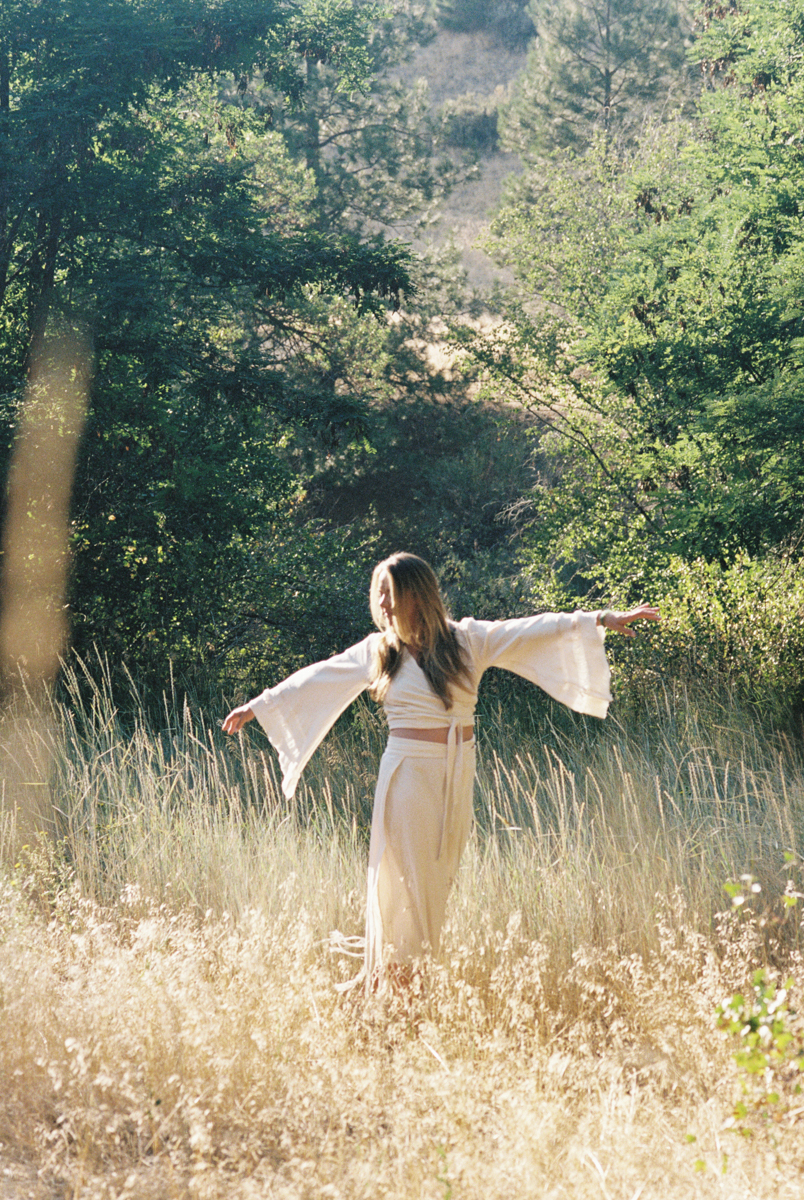
There is a hill just outside of Ashton, Idaho, that almost everyone drives over without a second thought. Farmland, fence posts, the ordinary business of a valley — and then, quite suddenly, it isn’t that anymore.
I am not most people, apparently. I feel this hill every single time.
Here is what happens: the fields fall away. The pines close in around the road the way a hand closes gently around something it doesn’t want to drop. The light shifts — softer all at once, cooler, almost underwater, the way light looks when you open your eyes beneath the surface of a lake. And something in my chest that has been clenched since the moment I left my driveway simply… releases. Every time. Without fail.
I have a word for this. I don’t use it lightly, and I don’t use it as a metaphor, dressed up to sound more interesting than it is. I use it because it is the only word that has ever actually fit.
I call it a portal.
And if you are the sort of person who has felt something like this before — in a doorway you couldn’t explain, on a mountain pass, standing at the edge of an ocean at exactly the wrong hour for anyone sensible to be out there — then you already know precisely what I mean, and you don’t need me to convince you of anything. You’re already halfway here. But if you haven’t yet had that particular experience, come sit with me for a minute, because I want to tell you about the ground beneath Island Park, Idaho, and why I think it might be exactly the place where you finally do.
Let’s start with the part that even the most stubborn skeptic in your life would have to agree with, because it happens to be geologically, provably true: you are not standing near a supervolcano when you arrive in Island Park.
You are standing inside one.
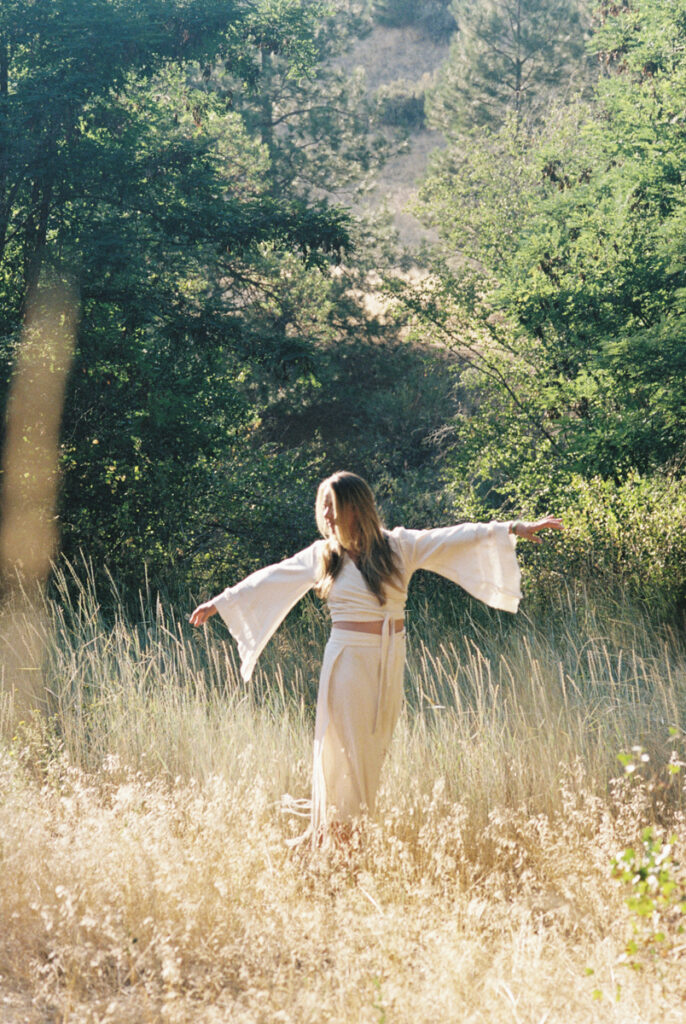
The whole valley sits within the Island Park Caldera — the vast, collapsed remains of one of the largest eruptions the Yellowstone hotspot ever produced, some 2.1 million years ago. It’s so enormous you can’t see its edges from anywhere within it. You simply feel its aftermath everywhere you turn: in the hot springs bubbling up through the meadows, in soil so mineral-rich it practically hums, in an odd, settled stillness to the air that people notice long before they know why.
Massive underground magma. River systems threading through everything. Springs rising up out of nowhere, as if the earth simply decided, here, water. Volcanic rock underfoot. Mountains on every horizon you can find. Across nearly every tradition that has ever paid close attention to land, these are exactly the ingredients people point to when they talk about a “power node” — a place where the world seems to gather itself up and concentrate.
Island Park doesn’t have one or two of those ingredients scattered about.
It has every single one, all at once, all in the same small stretch of forest and meadow.
Every tradition that has ever really listened to the land has its own name for what I’m describing.
The Western esoteric traditions call it a thin place — somewhere the membrane between ordinary life and something vaster grows thin enough to see through, if only for an afternoon. The Chinese traditions call it qi. In India, it’s prana. In Polynesia, mana. All these names, invented independently by people who never once compared notes across oceans and centuries, and yet somehow arriving, again and again, at the same insistence: some places simply carry more.
Some traditions go so far as to map the whole Yellowstone region as a single unfolding sequence — Jackson Hole as the opening, the threshold you cross without quite realizing you’ve crossed it; the Grand Tetons offering clarity, vision, a kind of cathedral stillness; Yellowstone itself as pure transformation, fire and steam and the endless work of dying and becoming; and then, finally, Island Park — the gentle one. The one where all that intensity finally settles into something soft enough to breathe.
I can’t hand you an instrument that measures any of this, but what I can tell you is that people from wildly different traditions, who have never read each other’s books or sat at each other’s tables, keep landing on the exact same handful of places, using nearly the exact same language to describe them.
You can call that a coincidence if you’d like. I have my own opinion about it, and I suspect you might too, by the time you’ve read this far.
Here is what I notice, now that I’ve stopped pretending I don’t notice it.
The pressure in the air seems to change. Time behaves strangely — not the clock, exactly, but the feeling of time, which stretches and softens the moment I cross that hill. My intuition sharpens in a way I can only describe as a light being switched on in a room I’d forgotten I owned. That night, without fail, my dreams arrive more vivid, more insistent, more alive than they’ve been in weeks. And the noise of the outside world — the deadlines, the group chats, the endless demand of being a person people need things from — simply goes quiet. And stays quiet. For hours.
For me, the shift begins on that unremarkable hill outside Ashton, before I’ve technically arrived anywhere at all — as though the land has already sensed me coming and started, quietly, to prepare a place for me.
There’s an old idea among people who pay close attention to this sort of thing: a portal doesn’t work the way we’ve been trained to expect. You don’t find it… the way you’d find a landmark on a map, a pin dropped by someone else’s careful directions. It opens — only once you’ve become receptive enough to let it.
Here is my invitation to you: as you crest that hill outside Ashton, go quiet. Turn off the music. Let the conversation rest for ten minutes. Just ten. See what arrives in the silence — your breath, a thought that surprises you, a sensation low in your body you can’t quite name, a sudden and inexplicable sense of spaciousness, as though a window has opened somewhere inside your ribs.
If it happens once, call it a lovely coincidence, and I won’t argue with you.
But if it happens every single time you make this drive — regardless of your mood, the weather, how late you’re running, how distracted your mind is when you crest that hill — then you will have found something that very, very few people ever slow down long enough to notice.
Island Park has been waiting a long while for you already.
It’s patient that way.


Be The First To Comment